
1 MINUTE
Homelessness in Japan today,
in one minute
Over the past ten years, the shape of homelessness has changed profoundly.
Smartphones and apps have changed the shape of hardship.
Not on the street or in parks, but in internet cafés and the corners of the city.
In plain sight, and yet hard to see — that is homelessness in Japan today.
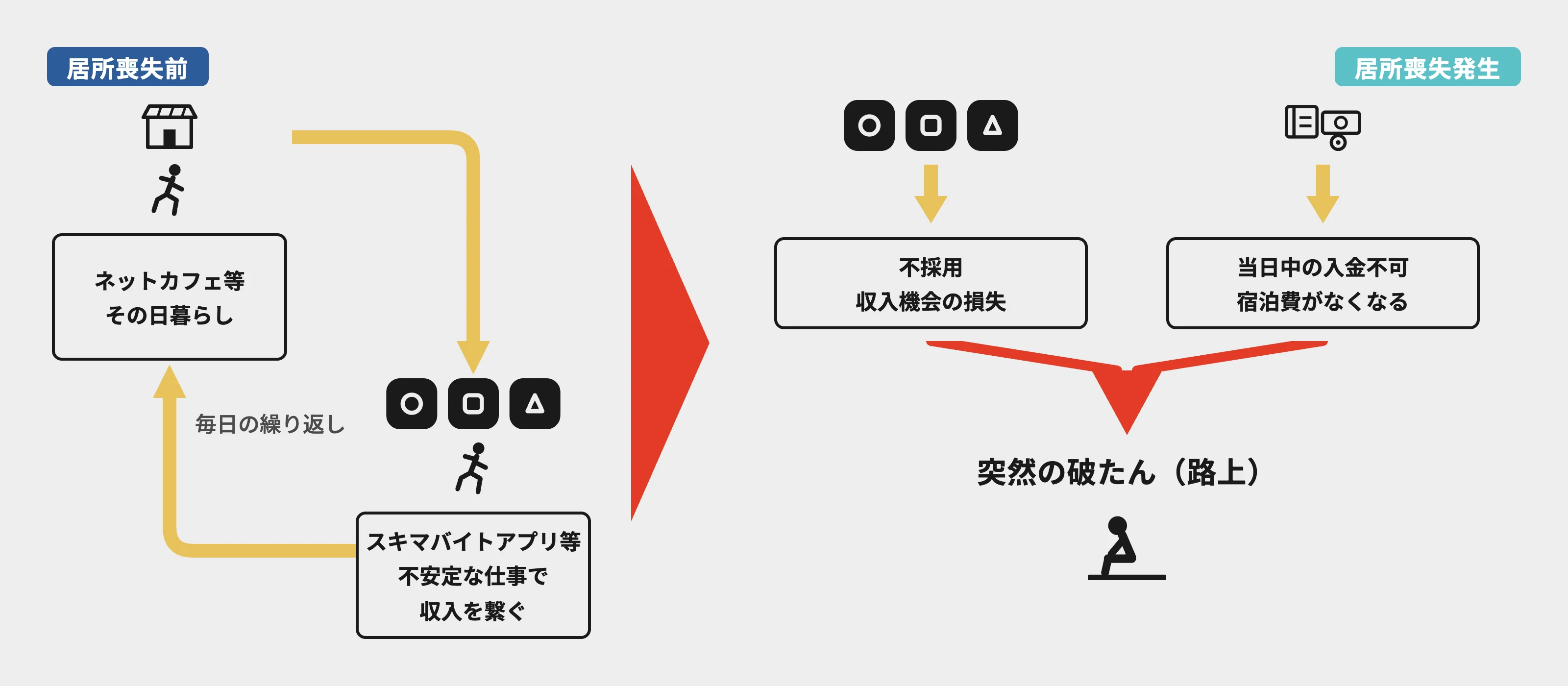
Earning by the day,
sleeping in an internet café
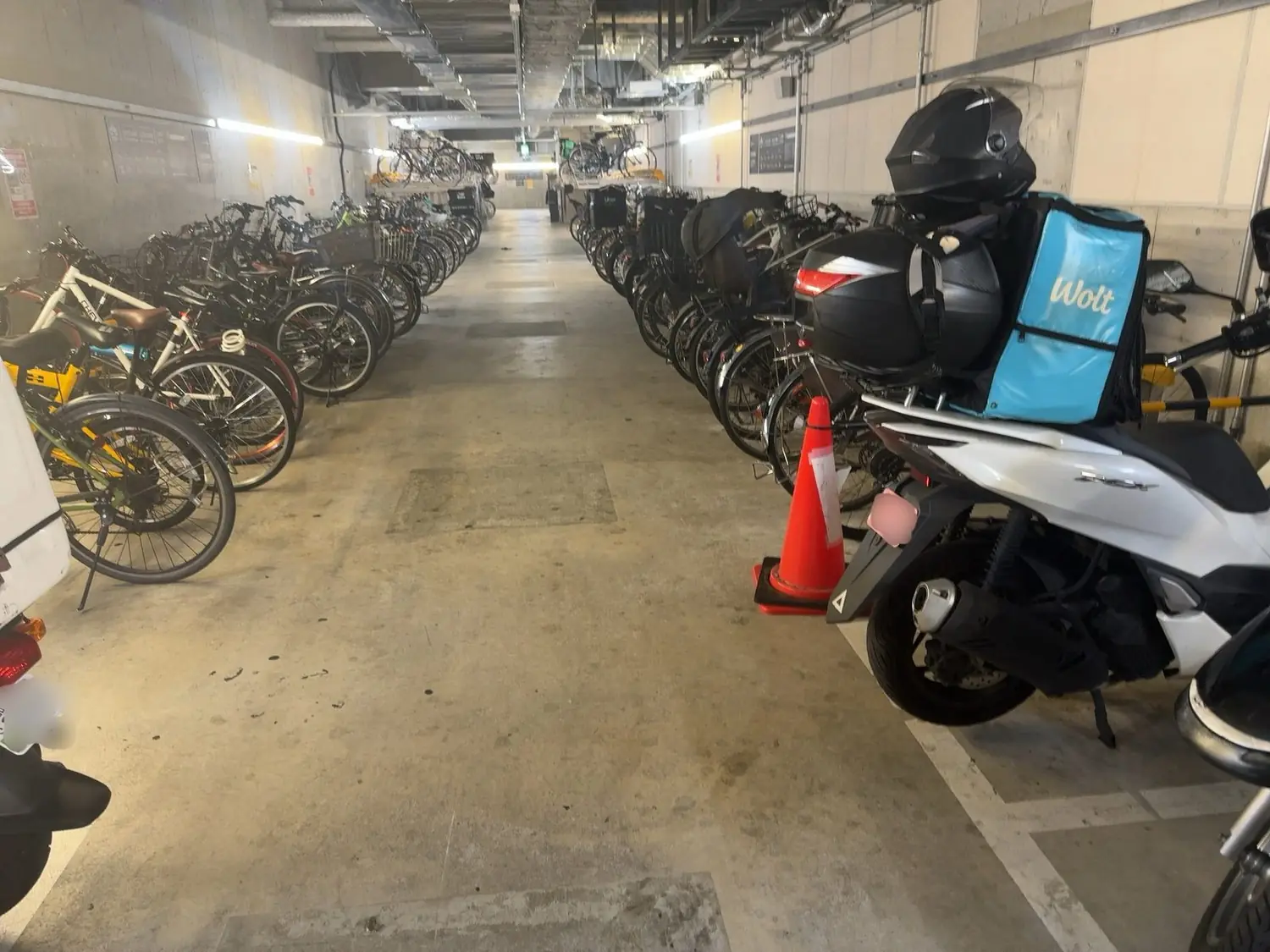
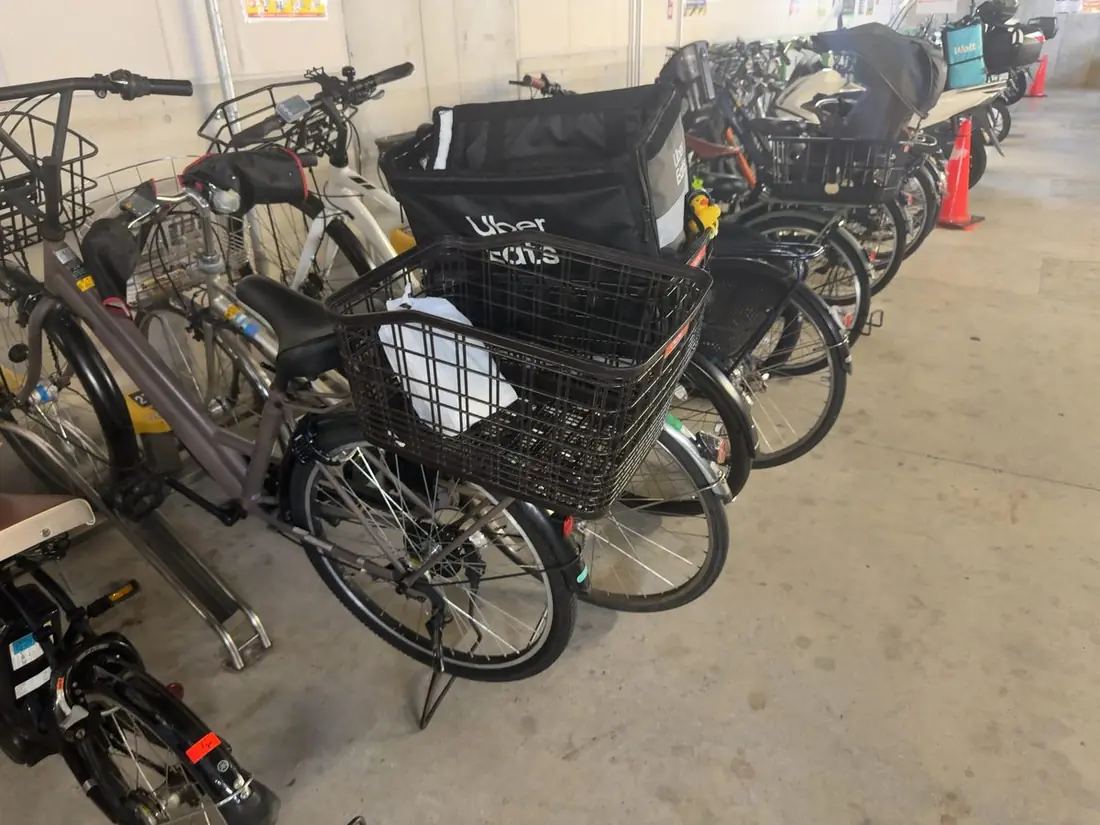
Beside Toyoko Plaza in Kabukicho there is a bicycle park charging ¥100 for 24 hours — the cheapest around. It has become a base for food-delivery workers.
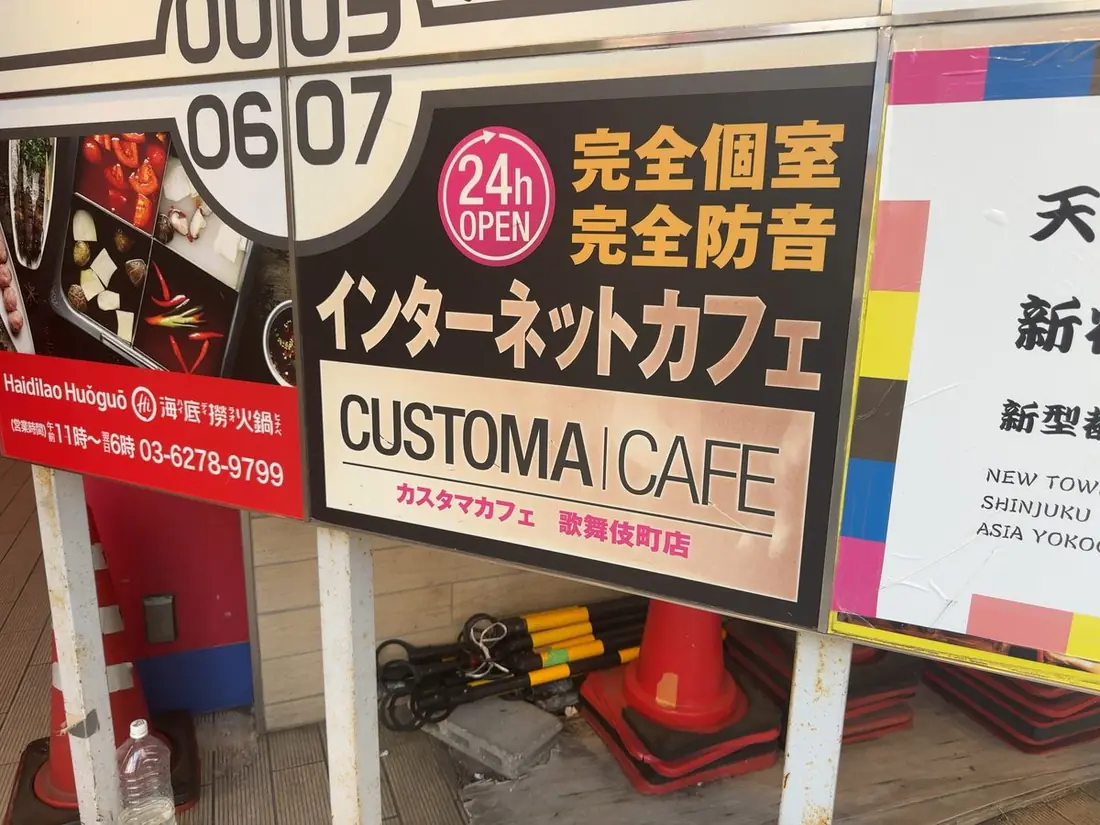
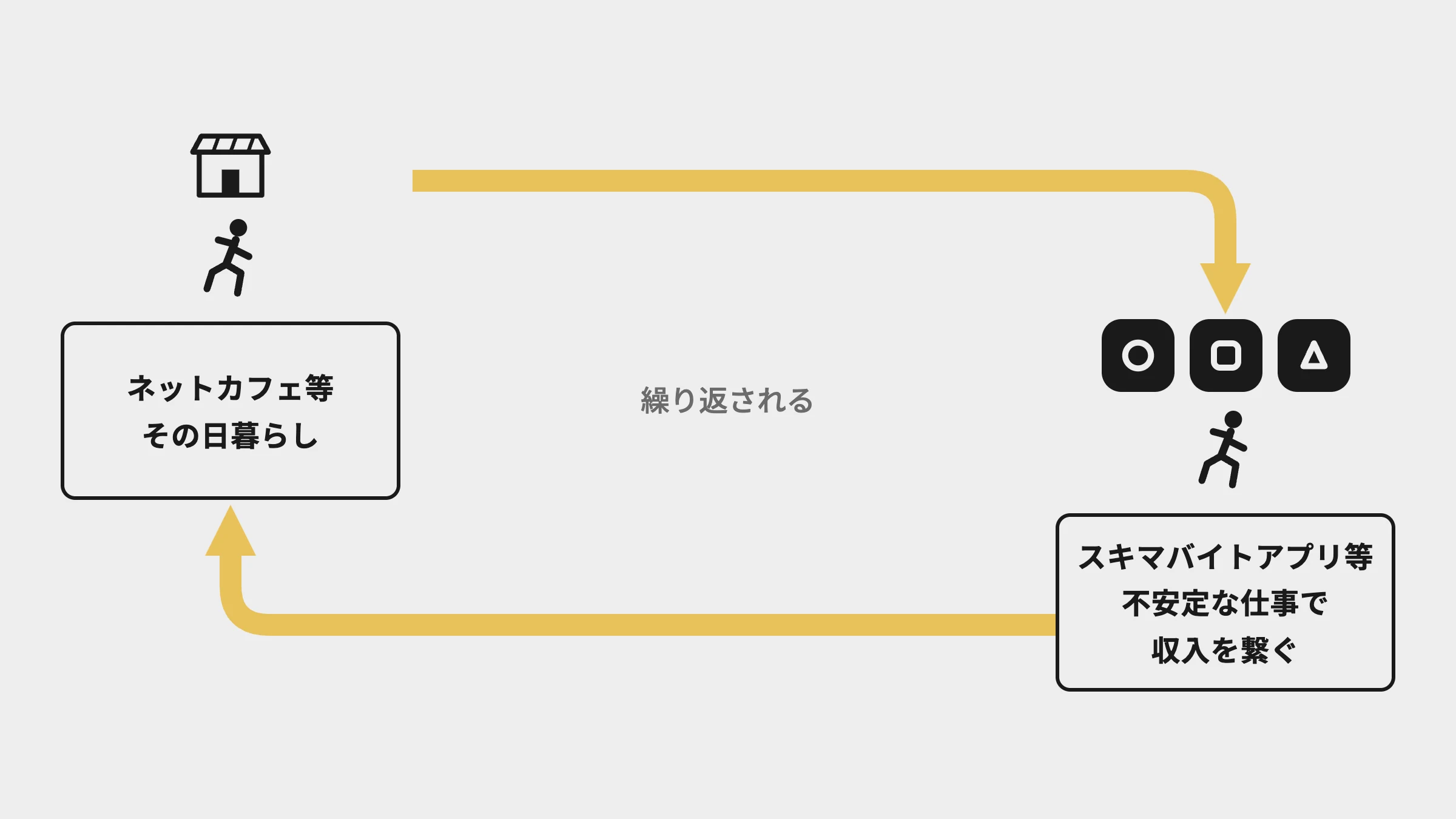
The area also has several internet cafés set up for long stays. Earn the day's money through food delivery or gig shift work, spend the night in an internet café, and repeat. This is what "internet café refugee" means in Japan today.
It collapses in a moment
Their lives swing on the smallest things.
One day without work. A delayed payment. A suspended account.
That alone wipes out the money for a bed, and they are thrown onto the street.
No one knows how many there are
They are the group living with precarious housing and precarious work — a hard-to-see form of homelessness. In Tokyo alone, more than about 4,000 people.
But that comes from a single survey the Tokyo Metropolitan Government carried out in 2017 and published in 2018, the only official data there is. The current number is unknown. Estimates from published data vary widely, and no one has yet grasped the real picture.
"If I just had a home, I could work"
- They want to work. The wish to sort things out themselves is strong.
- They do not come to soup kitchens or consultation events. The world of welfare is remote to them.
- Nine in ten of those able to work are registered with gig shift apps and rely on them as their main income.
- What they are looking for is not complex welfare support, but "if I just had a home", "if I just had a phone".
- Which is why they trust "services" (companies) more than "welfare" (NPOs).
The smartphone changed
the shape of hardship
Trouble arrives suddenly
People can keep finding work through an app right up to the last moment. So the point at which someone becomes homeless is impossible to predict.
Trouble arrives wherever they are
They move around while looking for work and for somewhere to sleep. When trouble hits, no one knows where they are — and sometimes they cannot move at all.
It needs a first-aid response
"Let us talk, and come back tomorrow" is too late. Without a bed and a meal first, lives are at risk.
This is exactly why public counters and conventional consultation services have not kept up with the change.
The ways we used to meet people
no longer reach them
For a long time, the main way of getting support to people living on the street was the soup kitchen: outdoor food distribution and consultation events. Supporters go to a fixed place at a fixed time. Built up over years, this has kept many people alive.
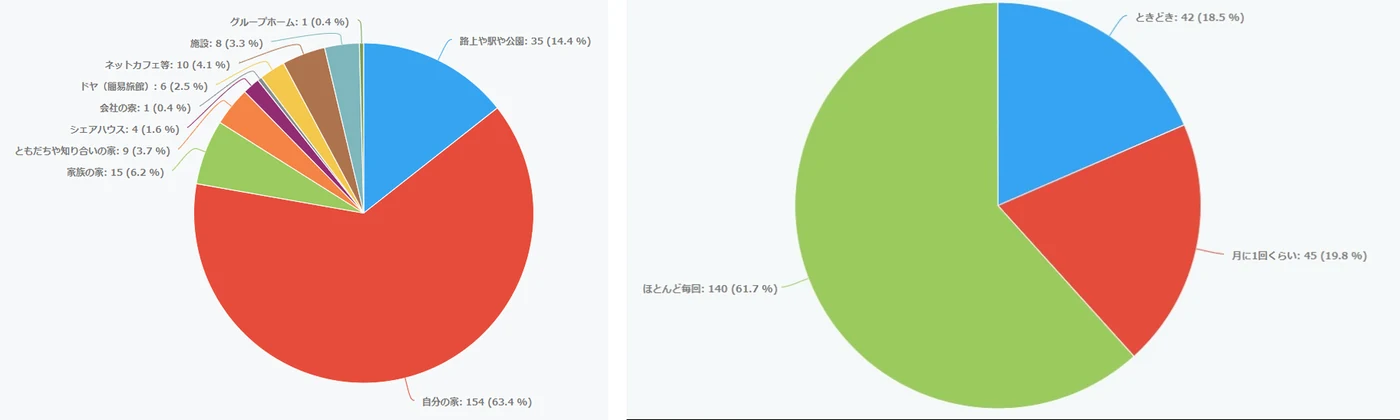
Today, about seven in ten of the people queuing there have housing. Half are receiving public assistance.
This does not mean soup kitchens have lost their purpose. It means there are that many people who cannot make life work even with a roof over their heads. Soup kitchens still support those people, and reliably so.
What has changed is where the people with nowhere to go tonight actually are. They are in internet cafés rather than on the street, and they do not come and join the queue in the first place. Street outreach, once the leading way of reaching people experiencing homelessness, no longer meets this group on its own.
Meanwhile, a market aimed at people in hardship has expanded fast. Internet cafés, providers for people behind on phone bills, gig shift apps, and services offering "move into our property today, and apply for public assistance".
These businesses buy their way to the top of Google search results and make a simple, clear promise: "you will definitely get housing". As a result, the poverty business has become the first thing that catches people in hardship, and support NPOs cannot compete on visibility.
Unbound by place, on the move
If you are connected online, it makes no difference where you are.
Long-distance buses are cheap, and disappointment with life outside the big cities, together with the hope that "there is work if you get to Tokyo", moves people. Many have no ties to where they grew up and no family, so they hesitate less about moving region.
Plenty of young people arrive in Tokyo with almost no money, and find they cannot make it work.
Who this group is:
precarious housing, precarious work
- No one knows the real number (somewhere between 4,000 and under 10,000 in Tokyo?)
- They want to work, and earn through "paid today" jobs found via apps such as gig shift platforms
- Structurally, they connect to neither public nor private support frameworks
- What catches them instead is a business built on people in hardship
- Enabled by communications technology, more and more of them are on the move
Toimikke exists to put an answer
to this change into practice.
A society where an SOS brings help, anytime and anywhere.
And where anyone can take part in providing it.